
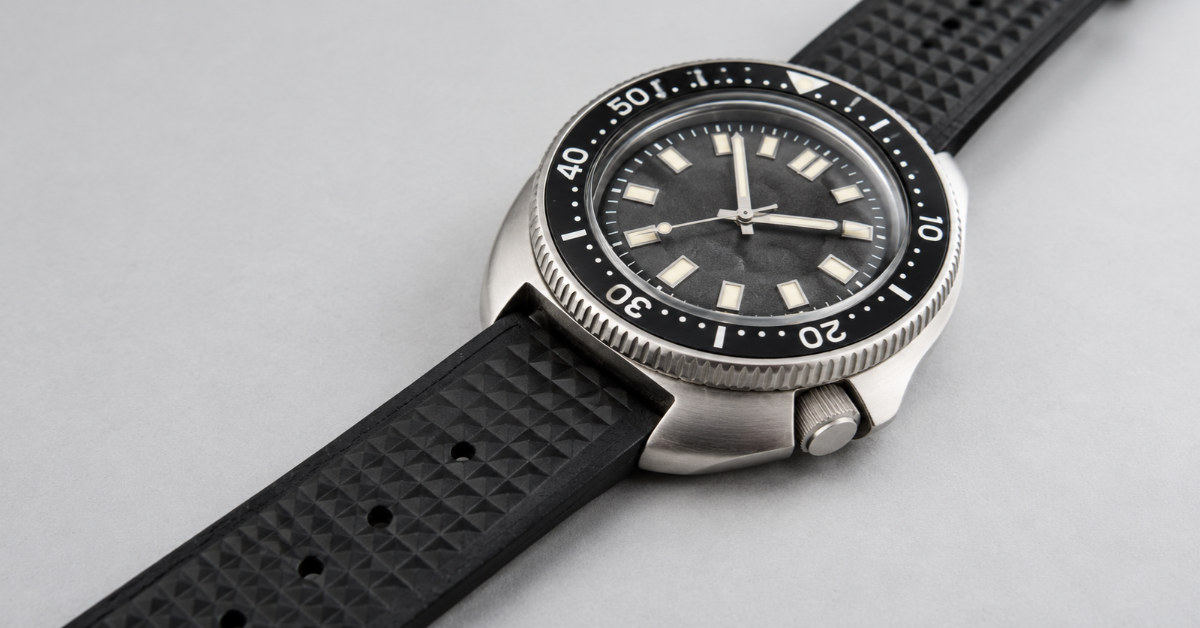
Most Seiko watch bands are 18mm, 20mm or 22mm wide. Dive models like the SKX, Turtle and Samurai take 22mm, while most Presage and Alpinist models take 20mm. Check your lug width first, then whether your watch uses straight, curved or integrated band ends. For strict originality buy genuine Seiko; for comfort and value, good aftermarket rubber, NATO or steel bands from established makers are excellent.
A new band is the cheapest way to make an old Seiko feel new again. Ten minutes, a spring bar tool, and the same SKX that looked tired on a cracked strap suddenly looks like a different watch.
But Seiko watch bands come with a catch. There are hundreds of references, three ways a band can attach, and a market full of straps labelled “genuine” that never saw a Seiko factory. Get the size or the end shape wrong and you’ve bought a band that rattles, gaps, or simply won’t go on.
This guide sorts all of that out. You’ll find a lug width chart for the models people actually own, a plain explanation of fit types, an honest look at genuine versus aftermarket, and our picks by watch style. We’ve swapped more straps on Seiko divers and dress watches than we’d like to admit, so the advice here comes from wrists, not spec sheets alone.
Seiko Watch Band Sizes: Lug Width Chart by Model
Lug width is the gap between the two lugs where the band attaches, measured in millimetres. It’s the one number every band purchase starts with. Seiko mostly sticks to even sizes, which makes life easier, but a few dress and heritage pieces use odd widths like 19mm.
| Seiko model / collection | Lug width | Typical stock band |
|---|---|---|
| SKX007 / SKX009 | 22mm | Z22 rubber or Jubilee bracelet |
| Seiko 5 Sports (SRPD, SSK GMT) | 22mm | Bracelet, rubber or nylon |
| Seiko 5 SNK809 / SNK series | 18mm | Canvas or bracelet |
| Prospex Turtle (SRP777, SRPE93) | 22mm | Silicone or bracelet |
| Prospex Samurai | 22mm | Bracelet or silicone |
| Prospex Mini Turtle | 20mm | Silicone or bracelet |
| Prospex Sumo (SPB101 and siblings) | 20mm | Bracelet or silicone |
| Prospex Alpinist (SPB series) | 20mm | Leather or bracelet |
| Presage Cocktail Time (SRPB) | 20mm | Leather or bracelet |
| Marinemaster 300 (SBDX) | 22mm | Bracelet or silicone |
No chart covers every reference, so treat this as a starting point. Seiko lists lug width on each official spec page, and that’s the number to trust if you have a newer or limited model.
How to measure lug width yourself
- Take the band off, or slide a ruler under it.
- Measure the inside distance between the lugs in millimetres, using calipers if you have them.
- Round to the nearest whole millimetre. 21.8mm is a 22mm watch.
- If you land on an odd number like 19mm or 21mm, buy that exact size. Squeezing a 20mm strap into 21mm lugs leaves a visible gap.
Width isn’t the only measurement that matters. Strap thickness changes how a watch wears: a 4mm-thick rubber dive strap suits a chunky Turtle, while a slim 2mm leather band looks right on a Cocktail Time and wrong on a Samurai. Length matters too — most standard bands fit wrists from roughly 16cm to 20cm, so larger wrists should look for “long” sizes.
Not sure which model you own? Our Seiko 5 models guide lists sizes for every current Seiko 5, and the Prospex collection page covers the dive and field lines.
Straight, Curved or Integrated: Will the Band Actually Fit?
This is where most wrong orders happen. Two bands can both say “22mm” and still fit your Seiko completely differently, because the end that meets the case comes in three shapes.
| End type | What it looks like | Can you use aftermarket? |
|---|---|---|
| Straight end | Flat end, sits between the lugs | Yes, any band of the same width |
| Curved end | End is shaped to hug the case | Yes, but a straight band leaves a small gap |
| Integrated | Band flows into the case with no standard lugs | Usually no, you need the original part |
Repair specialists make the same point: an integrated band generally has to be the original Seiko part, while a curved-end watch can take either the original or a straight-end band as long as the width matches (Total Watch Repair).
Vintage pieces add one more wrinkle. Some older Seiko divers, the 6309 being the classic example, have lug and case shapes that make generic straps look slightly off. If you own one, look for bands made specifically for that reference.
Find your band by case number
Flip the watch over. Engraved on the caseback is a code like 7S26-0020 — that one belongs to the SKX007. The first four characters are the movement calibre and the last four identify the case.
That case code is the fastest way to find a genuine replacement. Seiko parts suppliers index their bands by it, so searching “7S26-0020 strap” brings up the exact original part rather than a lookalike. It works for discontinued models too, which matters if your watch is older than the current catalogue.
Types of Seiko Watch Bands (and Which Watch Each Suits)
Every material changes the personality of the watch. Here’s how they compare before we get into specifics.
| Band type | Best for | Water-friendly? | Feel on the wrist | Typical price (approx.) |
|---|---|---|---|---|
| Rubber (Z22 style) | SKX, vintage divers | Yes | Firm, old-school | $25–$100 |
| Silicone / FKM rubber | Turtle, Samurai, Prospex | Yes | Soft, flexible | $40–$90 |
| NATO / nylon | Seiko 5, field and dive models | Yes, dries in hours | Light, casual | $15–$40 |
| Leather | Presage, Alpinist, King Seiko | No | Warm, breaks in over time | $30–$150 |
| Steel bracelet | Almost any Seiko | Yes | Weighty, dressy-sporty | $60–$200 |
Rubber and silicone
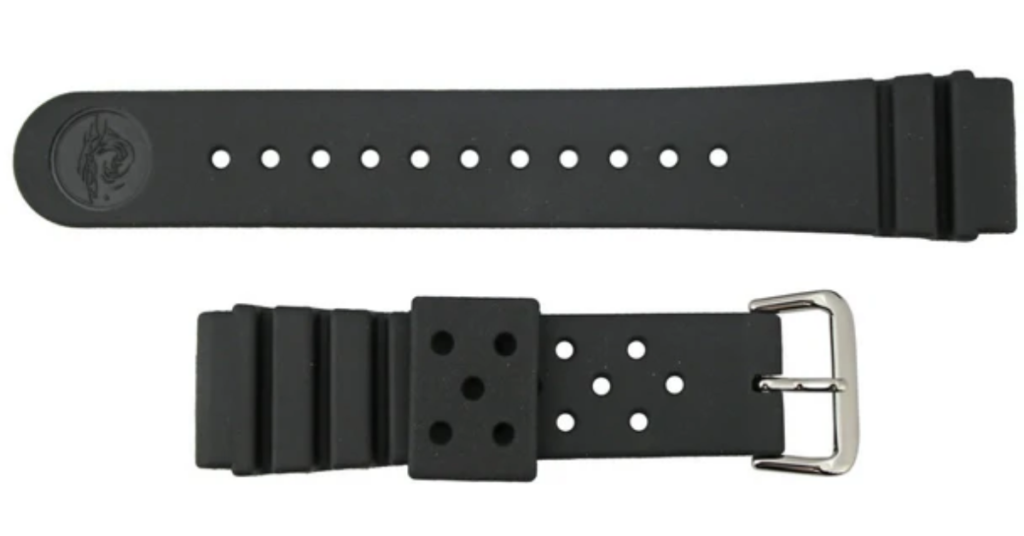
The classic Seiko diver strap is the Z22 — the vented, wavy rubber band that shipped on the SKX007. It’s tough and genuinely vintage-correct. It’s also stiffer than people expect. Owners regularly describe it as more hard plastic than soft rubber, and one reviewer said it felt like hard plastic after buying it hoping for something softer.
That’s not a flaw if you want the original look. If you want comfort, modern FKM (fluoroelastomer) rubber is the upgrade: softer, more resistant to lint and dust, and happy in salt water. On a Turtle or Samurai, it’s hard to beat.
NATO and nylon
A NATO strap threads under both spring bars, so the watch can’t fall off even if one bar fails. It’s cheap, it dries fast, and it changes the look of a Seiko 5 more than any other band. The trade-off is thickness — the extra layer lifts the watch slightly off the wrist, which bothers some people on taller cases.
Leather
Leather is the right call for Presage, Alpinist and anything you’d wear with a jacket. Genuine Seiko leather bands carry the Seiko logo and width stamped on the reverse, and the better ones come with a folding clasp that reduces wear on the leather (example listing). Keep leather away from pools and showers. It doesn’t forgive water.
Steel bracelets
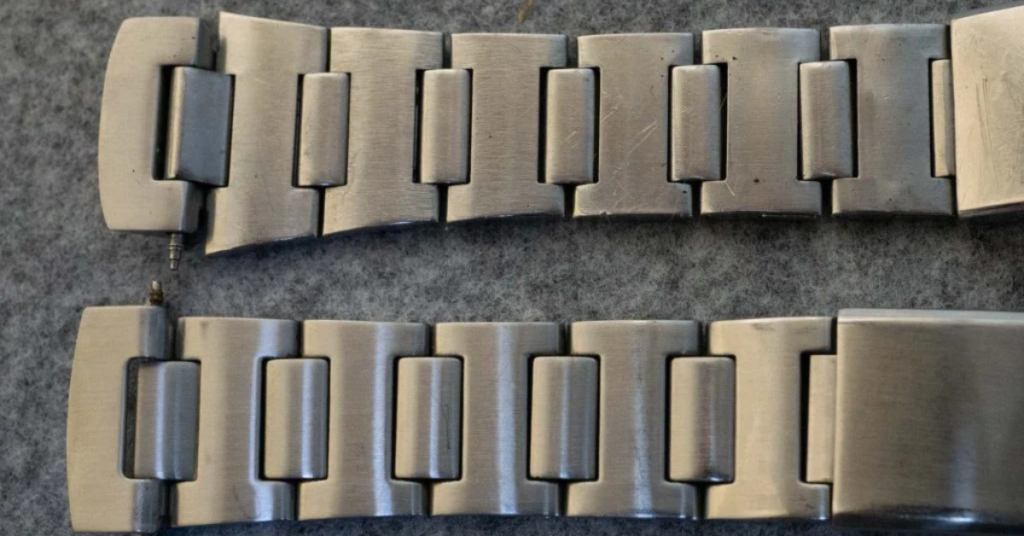
A bracelet turns a strap watch into a one-watch collection. Seiko’s own bracelets are comfortable, but older ones use folded links that feel light. SKX owners often point out that the stock Jubilee is solid on the outer links but uses bent metal in the centre — which is exactly why so many people upgrade to solid-link Oyster or Jubilee bracelets from aftermarket specialists.
Planning a dive-watch build? Our Seiko dive watches comparison shows which models wear best on rubber versus steel.
Genuine Seiko vs Aftermarket Bands: An Honest Comparison
Shops that sell only genuine parts will tell you aftermarket is always worse. Strap companies will tell you Seiko’s own bands are dull. Neither is quite right.
Go genuine when you’re restoring a vintage piece, keeping a watch fully original for resale, or replacing an integrated band where nothing else fits. A collector looking at an SKX007 cares whether that strap is the real Z22.
Go aftermarket when comfort, build quality or style matters more than originality. Specialist makers now produce bands that are heavier, better finished and better fitting than some stock Seiko parts. Uncle Seiko is a good example: founder Larry Bouligny started making straps because he couldn’t find decent replacements for the vintage Seiko divers he was restoring, and his tropic straps use stronger 2.5mm spring bars across the 19, 20 and 22mm sizes (Beyond the Dial).
One honest rule: keep the original band in a drawer. It costs nothing to store and it’s the first thing a future buyer will ask about.
Best Seiko Watch Bands by Watch Style
These are the pairings we’d actually put on our own watches. No single band wins everywhere, so they’re grouped by the job.
| Your Seiko | Our pick | Why it works |
|---|---|---|
| SKX007 / SKX009 | Genuine Z22 rubber or a solid-link Jubilee | Period-correct look, or a much nicer bracelet feel |
| Turtle / Samurai | 22mm FKM rubber | Soft, salt-proof, matches the tool-watch case |
| Seiko 5 Sports | NATO or two-piece nylon | Cheap, light, changes the look completely |
| SNK809 field watch | 18mm canvas or leather | Suits the military-field style |
| Alpinist / Presage | 20mm leather with a folding clasp | Dressy, and the clasp saves the leather |
| Vintage diver (6105, 6309) | Uncle Seiko tropic or waffle-style rubber | Vintage-correct shape, stronger hardware |
| Marinemaster / Sumo | Solid-link steel bracelet | Matches the weight of the case |
Rubber pick: the genuine Z22 (for originality)
For an SKX, nothing else looks as right. Genuine Z22 straps are sold under Seiko part code 4FY8JZ, so check for that number when you buy. Just expect a firmer strap than modern rubber.
Comfort pick: FKM rubber in 22mm
If you’ll wear a Turtle or Samurai in water every summer, this is the one. It shrugs off sunscreen and salt, and it doesn’t collect dust like cheap silicone.
Bracelet pick: solid-link aftermarket Jubilee or Oyster
The biggest single upgrade for an older Seiko diver. Look for solid end links and screwed links rather than folded metal and pins — you’ll feel the difference the first day.
Dress pick: Seiko leather with folding clasp
For Presage and Alpinist owners. It keeps the watch looking like it came that way, and the deployant clasp stops the leather cracking at the holes. If you’re still choosing the watch itself, our Seiko Presage page covers the line.
How to Spot a Fake “Genuine” Seiko Band
Plenty of listings use the word genuine loosely. A few checks catch most of them:
- The part code. Real Seiko bands have a reference number (like 4FY8JZ for the Z22). Search it and compare photos.
- The stamping. Genuine straps show a crisp Seiko logo and width on the reverse or buckle. Blurry or missing marks are a red flag.
- The price. The same genuine strap rarely sells for a fraction of what reputable parts dealers charge. Too cheap usually means not genuine.
- The seller. Buy from authorised Seiko dealers, established parts suppliers, or service centres. Marketplace listings without a part number deserve suspicion.
How to Change a Seiko Watch Band
You don’t need a watchmaker for a strap swap. You need a spring bar tool, a soft cloth and five minutes.
- Lay the watch face down on a soft cloth.
- Slide the forked end of the spring bar tool between the band and the lug, then press the spring bar inward.
- Ease that side of the band out, then repeat on the other end.
- Fit the spring bars into the new band.
- Seat one end of a spring bar in its lug hole, compress the other end, and let it click into the opposite hole.
- Tug gently on both sides. If anything moves, reseat it before you wear it.
Two tips from experience. First, Seiko divers usually use thicker spring bars than generic straps include, so reuse your originals or buy the matching size. Second, many modern straps ship with quick-release bars, which skip the tool entirely. For a bracelet that needs sizing, some Seiko bracelets use screws rather than pins, so check before you start hammering.
How to Care for Your Seiko Band
- Rubber and FKM: Rinse in fresh water after the sea or pool. Avoid alcohol-based cleaners, which dry the rubber out.
- Leather: Keep it dry, let it air out between wears, and rotate it with a second strap in summer.
- NATO: Throw it in a laundry bag with a gentle wash.
- Steel: Scrub between the links with a soft toothbrush and warm soapy water every few months. Dirt in the links is what wears them.
Replace spring bars every time you change straps on an expensive piece. They cost almost nothing, and a tired spring bar is the usual reason watches end up on the floor.
Seiko Watch Bands: Frequently Asked Questions
What size band fits my Seiko watch?
Most Seiko watches take an 18mm, 20mm or 22mm band. Dive models such as the SKX, Turtle and Samurai use 22mm, while most Presage, Alpinist and Sumo models use 20mm. Measure the gap between the lugs or check the official spec page for your reference.
Are Seiko watch bands interchangeable?
Yes, as long as the lug width and end type match. A 22mm straight-end band fits any 22mm Seiko with standard lugs. Watches with integrated bands are the exception and usually need the original part.
Do I need a genuine Seiko band?
Only if originality matters to you, for example on a vintage piece or a watch you plan to sell. For everyday wear, quality aftermarket rubber, NATO and steel bands often match or beat the stock band on comfort.
What is the Seiko Z22 strap?
The Z22 is Seiko’s vented rubber dive strap, best known as the original band on the SKX007 and SKX009. It’s 22mm wide, sold under part code 4FY8JZ, and is firmer than modern silicone or FKM rubber.
How do I find the correct band for my Seiko?
Check the case number engraved on the caseback, such as 7S26-0020. Seiko parts suppliers index replacement bands by this code, so searching it finds the exact original band for your model.
Can I put a NATO strap on my Seiko?
Yes, on any Seiko with standard lugs and spring bars. Buy the NATO in your exact lug width. It adds a little height under the case, so it suits field and dive models better than slim dress watches.
The Bottom Line
Get the lug width and end type right, and the rest of choosing Seiko watch bands is just taste. Start with the size chart above, decide whether originality or comfort matters more for that particular watch, and keep the stock band safe either way.
Still choosing the watch to pair with all those straps? Our Seiko 5 Sports guide and best Seiko watches under $500 and $1,000 are the natural next reads, and the Seiko top models page rounds up the whole range.